
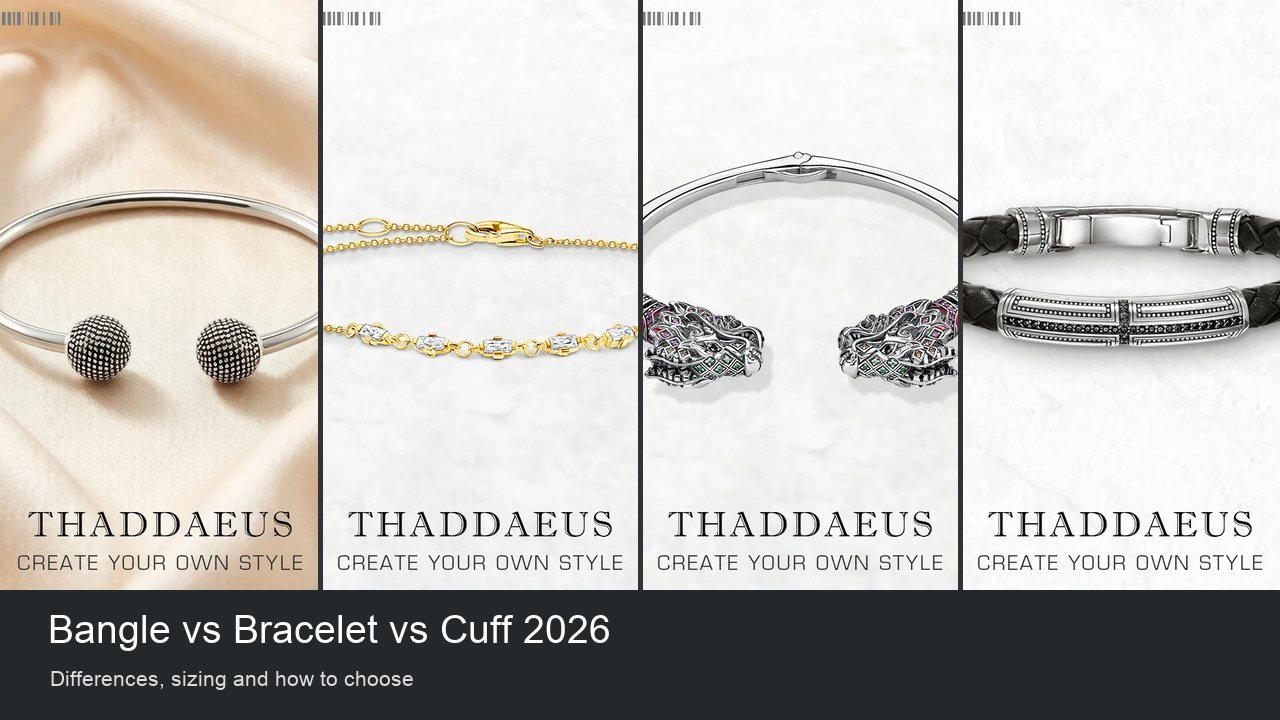
A bangle, bracelet, and cuff can all sit in the same jewelry drawer, but they do not fit or move in the same way. The quick answer is that bracelet is the broad category. In everyday shopping language, it often means a flexible chain, link, bead, cord, or leather design. A bangle keeps a rigid circular shape, while a cuff is a rigid or semi-rigid bracelet with an opening that slips over the side of the wrist.
Those structural differences affect sizing, comfort, and how each style works with sleeves or a watch. This 2026 guide compares bangle vs bracelet vs cuff designs so you can choose by fit instead of relying on the product name alone.
Bangle vs Bracelet vs Cuff: The Main Differences
| Style | Structure | How It Goes On | What to Measure | Typical Feel |
|---|---|---|---|---|
| Bracelet | Usually flexible | Clasp, elastic, tie, or slide closure | Wrist circumference | Moves with the wrist |
| Bangle | Rigid, closed or hinged | Slides over the hand or opens at a hinge | Hand width for slip-on styles; wrist for hinged styles | Structured and mobile |
| Cuff | Rigid or semi-rigid with an opening | Slides over the narrow side of the wrist | Wrist circumference and opening | Close and sculpted |
Retail names are not always perfectly consistent. A product may be called a bangle bracelet or cuff bangle. Look at the construction, opening, and size information before deciding how it should fit.
What Is a Bracelet?
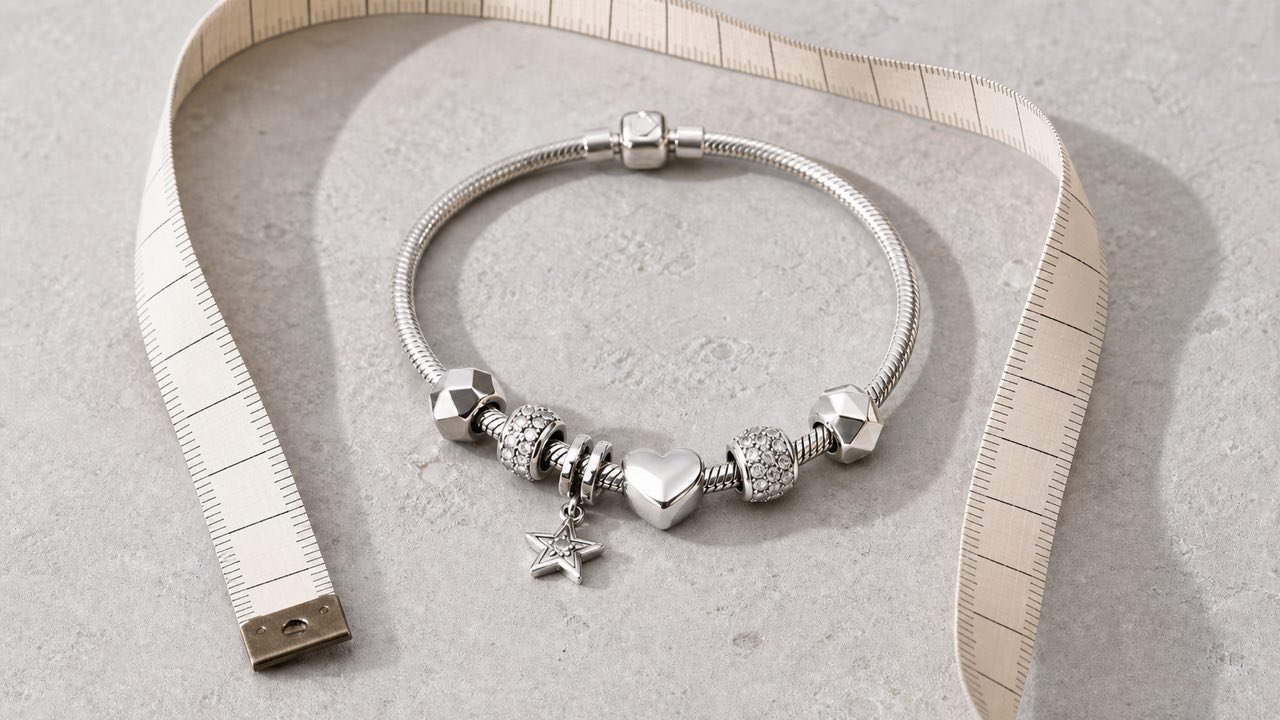
Bracelet is the umbrella term for jewelry worn around the wrist. Flexible styles include chain bracelets, link bracelets, beaded strands, leather bands, and charm bracelets. Because the material bends around the wrist, these designs normally use a clasp, elastic section, or adjustable closure.
A flexible bracelet is often the easiest option when you want movement or an adjustable fit. A chain with an extension section can also be more forgiving as a gift than a rigid piece. The trade-off is that fine chains and clasps need more careful handling than a solid form.
What Is a Bangle?
A bangle holds its shape instead of draping around the wrist. A traditional slip-on bangle is a complete circle and must pass over the widest part of the hand. Other versions use a hinge or clasp, allowing a closer fit without traveling over the knuckles.
Bangles create clean lines and a distinct sound and movement when stacked. One substantial bangle can act as a focal point, while two or three slimmer pieces can build a layered look. When shopping, check whether the listed size refers to inner diameter, inner circumference, or wrist size; those measurements are not interchangeable.
What Is a Cuff Bracelet?
A cuff has an open section rather than a fully closed circle. It is usually placed over the narrow side of the wrist and then rotated into position. The opening makes it easier to put on than a slip-on bangle, but the body still feels structured.
A cuff should sit securely without pinching or leaving a deep mark. Do not repeatedly pull a rigid silver cuff far apart to change its size. Bending metal back and forth can weaken the form, loosen settings, or distort decorative details. Choose a size and opening designed for your wrist.
How to Measure for Each Style
For a flexible bracelet
Wrap a flexible tape snugly around the wrist where you plan to wear the piece. Keep the tape flat and record the circumference in millimeters. Then compare that number with the individual product’s size chart and fit guidance. A fitted bracelet needs less movement; a charm or bead bracelet may need more room because the components take up space inside the circle.
For a slip-on bangle
Bring your thumb toward your little finger as if you were sliding on a bangle. Measure around the widest part of the compressed hand, or compare the inside diameter of a bangle that already passes comfortably over your knuckles. Wrist circumference alone is not enough for a closed slip-on style.
For a hinged bangle or cuff
Measure the wrist snugly at its narrowest point, then use the brand’s chart for the intended fit. Also check the inside dimensions and, for a cuff, the opening. Tiffany’s cuff guide distinguishes the closed bangle from the open-backed cuff and bases cuff sizing on wrist circumference. The Jewelers of America bracelet guide likewise describes bangles as rigid slip-on or opening styles and notes that cuffs should fit snugly.
If you are measuring for a charm bracelet, see our separate charm bracelet size guide for the space taken up by charms and future additions.
Which Style Is Best for Everyday Wear?
Choose according to the tasks, clothing, and jewelry you already wear:
- For typing and desk work: a slim bracelet or close-fitting cuff may move less than a loose stack of bangles.
- For sleeves and knitwear: a smooth bangle is less likely to catch than an intricate chain, although a wide cuff may compete with a fitted cuff or coat sleeve.
- For an adjustable gift: a bracelet with an extension or sliding closure usually gives the recipient more flexibility.
- For a strong single statement: choose a broad bangle or cuff and leave a little visual space around it.
- For stacking: mix widths and textures, but avoid packing the wrist so tightly that closures rub or stones strike neighboring metal.
How to Style Bangles, Bracelets, and Cuffs in 2026
Current wrist styling is less about matching every piece and more about controlling proportion. Start with one anchor: a carved bangle, an open cuff, a watch, or a heavier link bracelet. Add one or two quieter pieces rather than filling the entire wrist. Repeating one detail, such as silver color, black stone, or a geometric line, keeps mixed shapes connected.
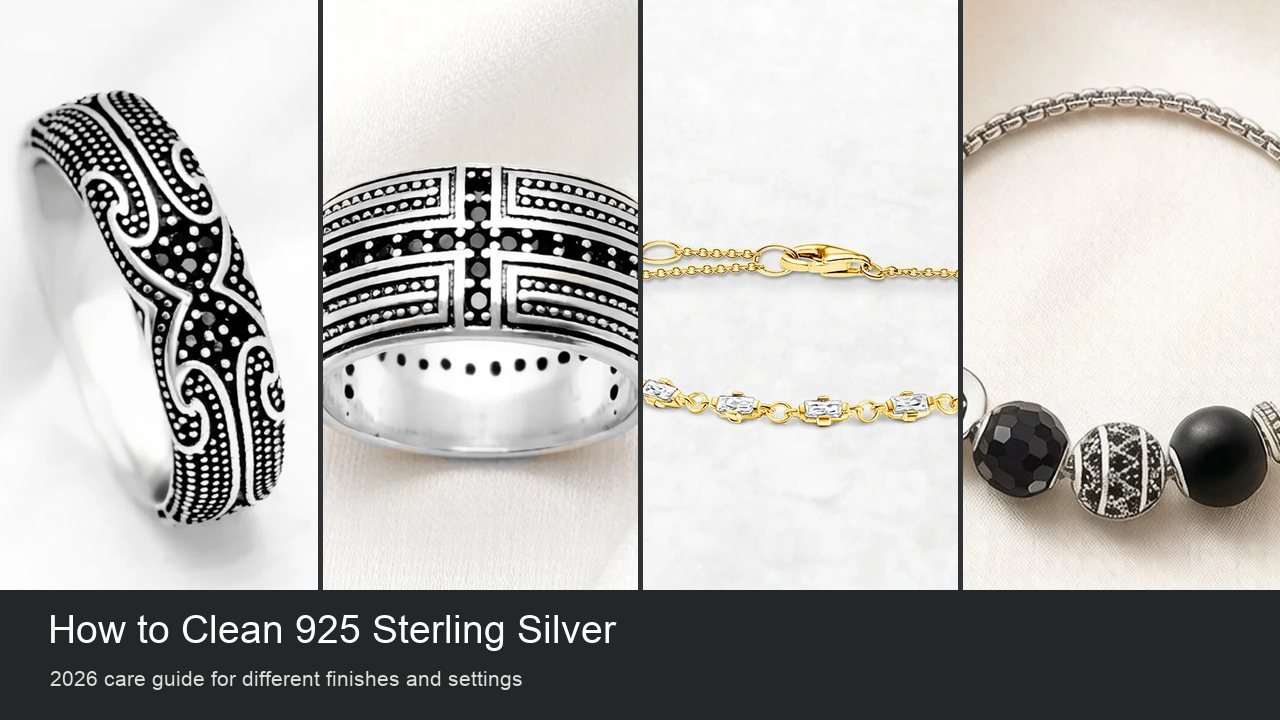
When combining metals or finishes, leave a small amount of room between pieces with raised stones or sharp relief. This reduces direct contact and makes each silhouette easier to see. After wearing sterling silver, wipe away moisture and skin oils before storage; our 925 sterling silver cleaning guide covers routine care without harsh shortcuts.
Explore Bangle and Bracelet Styles
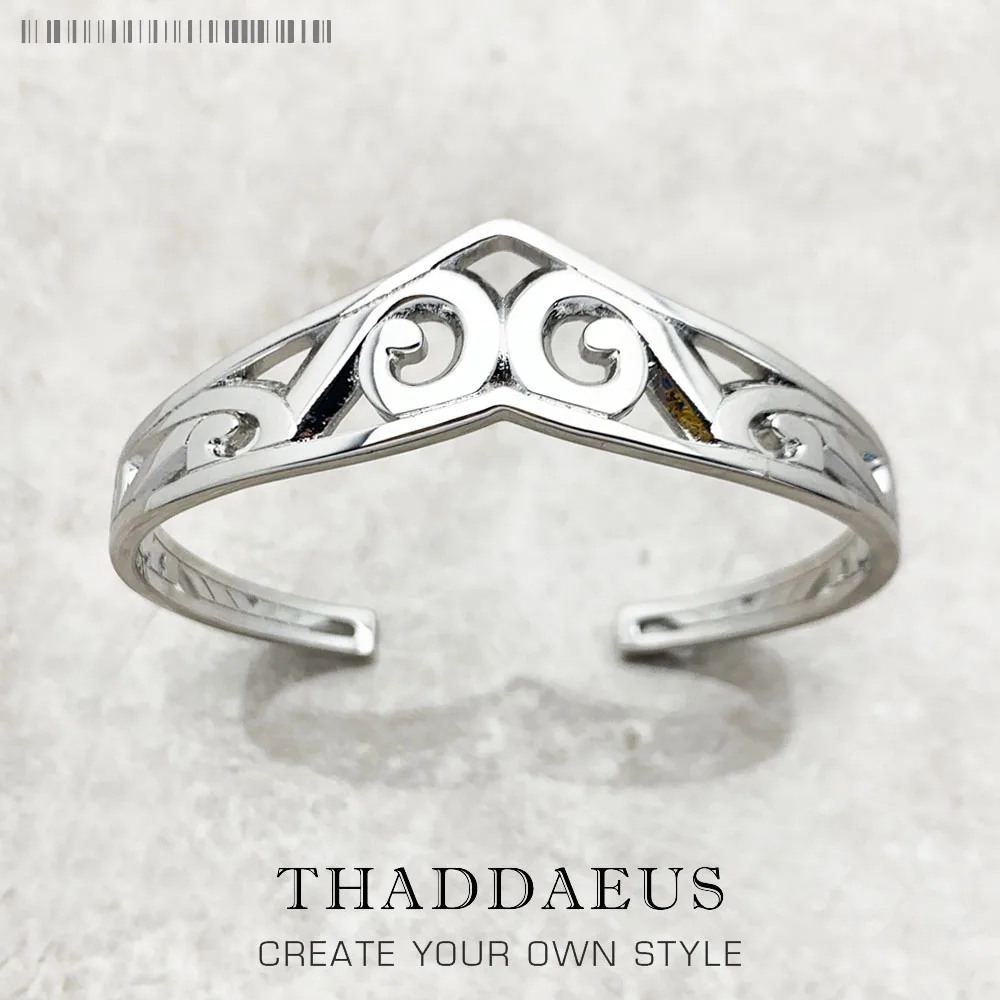
Compare the construction as well as the design. Thaddaeus Jewelry offers women’s bangles, women’s bracelets, men’s bangles, and men’s bracelets. These examples show the difference between structured and flexible wrist jewelry across both collections.



Frequently Asked Questions
Yes. Bracelet is the broad category for jewelry worn around the wrist. A bangle is a rigid type of bracelet that keeps a circular or oval shape.
A bangle is usually a closed circle or a hinged closed form. A cuff has an open section and is placed over the narrow side of the wrist.
Bring your thumb toward your little finger and measure around the widest part of the compressed hand. You can also measure the inside diameter of a bangle that already fits.
A cuff should feel secure and sit close to the wrist without pinching, leaving a deep mark, or restricting movement. Use the product's wrist and opening measurements instead of repeatedly bending the metal.
A flexible bracelet with an extension chain or sliding closure is usually the most forgiving. Closed bangles and fitted cuffs need more precise hand or wrist measurements.
The Bottom Line
A bracelet is the broad category, a bangle is a rigid closed or hinged form, and a cuff is an open structured form. For sizing, measure the wrist for flexible bracelets and cuffs, but also measure the hand for a slip-on bangle. Once the structure and fit are right, the choice comes down to how much movement, adjustability, and visual weight you want on the wrist.
Leave a comment